Melasmex-Q™ Laser Treatment for Melasma
Melasma is one of the most stubborn and biologically complex forms of hyperpigmentation. Driven by hormonal fluctuations, heat, cellular signalling, and chronic melanocyte hyperactivity, it requires a restrained medical approach. Melasmex-Q™ downregulates pigment production safely and progressively—clearing visible patches while minimising the risk of thermal rebound darkening.
Personally administered by Dr Bradley Tomkins (MBChB, BSc, MRCGP) as the flagship melasma protocol within the doctor-led ChromaQure™ pigment correction system.
The Science Behind Melasmex-Q™
Melasma is not merely superficial pigment; it is a chronic disorder of melanocyte and microvascular signalling.
Multilevel Pigment Depth
Unlike discrete freckles or sunspots that sit strictly in the epidermis, melasma pigment is distributed across multiple architectural layers: the epidermis, the dermo-epidermal junction, and deep within dermal melanophages.
Melanocytes in melasma exist in a state of chronic biological irritability. When subjected to aggressive chemical burns, intense pulsed light (IPL), or high-heat ablative lasers, the thermal injury triggers severe inflammatory cascades that cause melasma to rebound darker, deeper, and more extensive than before.
- Addresses epidermal, dermal, and mixed melasma components
- Avoids the bulk thermal heat that triggers melanocyte hyper-reactivity
- Replaces aggressive peeling with sub-cellular photoacoustic energy
Photoacoustic Melanosome Downregulation
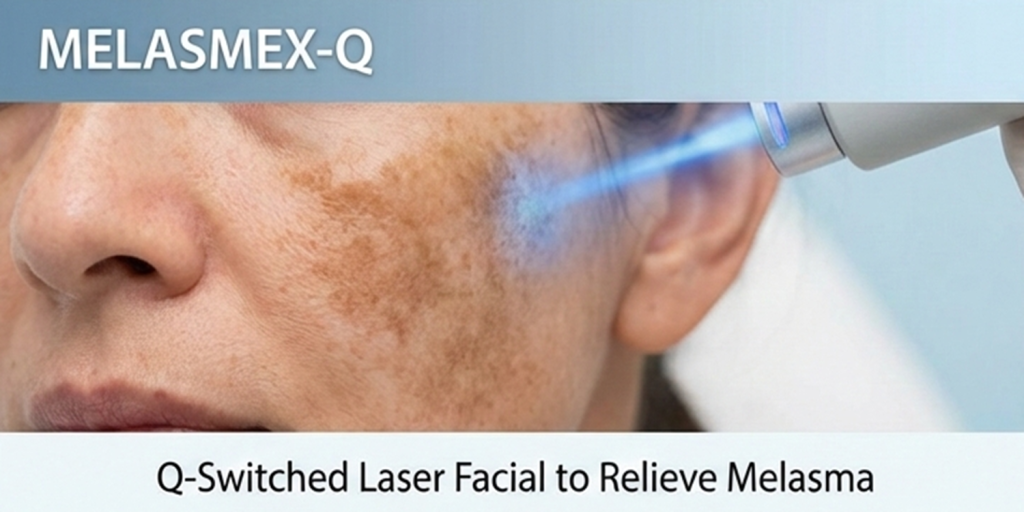
Melasmex-Q™ utilizes large-spot, low-fluence 1064nm Q-switched laser energy. This wavelength has the lowest melanin absorption coefficient, allowing it to bypass surface pigment safely and penetrate deeply into dermal tissue.
Rather than attempting to destroy melanocytes (which triggers rebound darkening or permanent hypopigmentation), Melasmex-Q™ creates gentle photoacoustic shockwaves. This mechanically shatters pigment granules inside melanosomes and progressively downregulates active melanocyte signalling without overheating the cutaneous envelope.
- Preserves melanocyte cell viability while clearing internal pigment
- Safe for all skin complexions, including deeper ethnic skin (FP IV–VI)
- Cumulative pigment reduction across a planned clinical series
Clinical Reality: Management & Control vs False "Cures"
Melasma—whether epidermal, dermal, or mixed—is a chronic condition with deep genetic, vascular, and hormonal roots. Melanocytes associated with dermal melasma cannot simply be vaporised or burned away; attempting to do so is medically counter-productive.
Melasma cannot be permanently "cured", but it can be substantially lightened, controlled, and stabilised through the combination of lifestyle adjustments, medical topicals, and staged Melasmex-Q™ laser sessions. If a patient is seeking an overnight "quick fix" or complete permanent eradication hyped by social media influencers, Melasmex-Q™ will unfortunately be inappropriate for them.
Every case of melasma is unique. During your clinical consultation, Dr Brad will conduct a comprehensive risk assessment to determine whether your skin is currently in an optimal state for laser therapy.
Who Benefits from Melasmex-Q™?
Designed for individuals seeking structured, doctor-led pigment management with realistic expectations.
Hormone-Related Melasma
Pigmentation triggered by oral contraceptives, HRT, or post-pregnancy hormonal shifts (at least 6–9 months after delivery or cessation of breastfeeding).
Heat & UV-Triggered Patches
Facial discolouration across the cheeks, forehead, or upper lip that rapidly flares or darkens upon exposure to sunlight or ambient heat.
Topical-Resistant Cases
Melasma patches that have failed to respond adequately to medical creams alone, or that recur immediately once creams are stopped.
Darker & Reactive Skin Types
Patients with Fitzpatrick IV–VI who require sub-cellular, non-thermal laser physics to avoid triggering post-inflammatory rebound.
Mixed & Dermal Melasma
Deep-seated pigment clusters held within dermal melanophages that cannot be reached by superficial peels or microdermabrasion.
Long-Standing Uneven Tone
Persistent bilateral facial pigmentation that requires a staged, conservative reduction plan under direct medical supervision.
Your Melasmex-Q™ Treatment Roadmap
A structured 5-stage medical protocol ensuring safety, pigment stability, and steady improvement.
Dermoscopy
Dr Brad evaluates pigment depth, reviews vascular and hormonal triggers, and determines your baseline reactivity.
Targeted Laser
Non-thermal 1064nm QS Nd:YAG energy is delivered across mapped zones using low fluences and large spot sizes.
Zero Downtime
No scabbing, no frosting, and no peeling. Mild rosy warmth subsides within hours, allowing immediate return to routine.
Staged Series
Sessions are spaced 2 to 4 weeks apart. Pigment softens gradually, with key visible improvement typically seen by sessions 4–6.
Maintenance
Once pigment is controlled, quarterly maintenance sessions (every 3–4 months) help prevent UV- and heat-induced recurrence.
Melasmex-Q™ Pricing Structure
Structured package options designed to support the multi-stage biological clearance required for melasma.
Single Session
- Doctor-administered 1064nm photoacoustic toning
- Includes full dermoscopic assessment
- Non-thermal protocol with zero social downtime
Course of 4 Sessions
- 4 structured sessions spaced 2–4 weeks apart
- Equivalent to £362.50 per session
- The key foundational stage for noticeable tonal clearing
Course of 6 Sessions
- 6 structured sessions spaced 2–4 weeks apart
- Equivalent to £350 per session
- Recommended for deep, dermal, or longstanding patches
Optional Finishing Stage: REVIDA ReLight (Fitzpatrick I–III Only)
For patients with lighter skin phototypes who have achieved optimal, stable pigment control after a minimum of 3 Melasmex-Q™ sessions, Dr Brad may recommend an optional REVIDA ReLight CO₂ laser pass. This micro-fractional finishing protocol refines epidermal texture, restores dermal radiance, and smooths fine photo-damage—strictly dependent upon proven melasma stability for clinical safety.
Why Choose a Doctor-Led Clinic for Melasma?
- Direct Doctor Delivery: Melasma cannot be managed using one-size-fits-all technician settings. Dr Bradley Tomkins personally evaluates your skin, calibrates fluences, and delivers every treatment.
- Accurate Pathology Triage: Polarized dermoscopy identifies pigment depth and microvascular involvement, preventing the catastrophic rebound burns associated with high-street IPL.
- Prescription Dermatology Options: As a fully qualified medical doctor and GP, Dr Brad can combine in-clinic laser passes with medical tyrosinase inhibitors, azelaic acid, or oral tranexamic acid protocols.
- Honest Clinical Ethics: We prioritize your safety over aggressive marketing, ensuring you receive transparent advice regarding achievable results, stability, and ongoing maintenance.
Take Control of Your Melasma Today
Begin your journey toward clearer, calmer, and more uniform skin with a structured, physician-led treatment plan. Schedule your clinical assessment with Dr Brad in Bristol today.